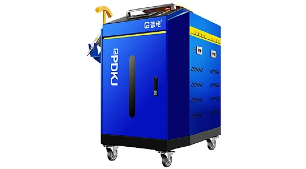
Laser welding machines represent a cutting-edge advancement in metal joining technology. Unlike traditional methods like MIG, TIG, or manual welding, laser welding uses a focused laser beam to join materials quickly, precisely, and with minimal heat distortion. This makes it an indispensable tool across industries, including automotive, aerospace, medical, and electronics manufacturing. With growing demand for precision and efficiency, understanding how these machines work and their applications is essential for engineers, technicians, and manufacturers.
What is Laser Welding?
Laser welding is an advanced joining process where a highly concentrated laser beam melts and fuses metals or other compatible materials. Unlike traditional welding methods such as MIG (Metal Inert Gas) or TIG (Tungsten Inert Gas), laser welding offers minimal spatter, precise control, and reduced thermal distortion. This makes it ideal for industries requiring high-quality, repeatable welds with tight tolerances.
Suitable Materials
Laser welding can handle a variety of materials depending on the wavelength, power, and beam delivery:
· Metals: Stainless steel, aluminum, titanium, copper alloys, nickel-based alloys.
· Plastics: Certain thermoplastics compatible with laser wavelengths.
Compared with traditional welding, laser welding minimizes post-weld finishing, produces cleaner results, and allows precise control of weld depth and width. This precision is particularly valuable in high-tech applications such as aerospace, medical devices, and electronics.
Core Components of a Laser Welding Machine
A laser welding machine consists of multiple critical components that work together to ensure accurate, high-quality welds.
Laser Source
The laser source generates the concentrated beam necessary for welding.
· Fiber Lasers: Excellent for reflective metals like copper and aluminum due to high absorption.
· CO₂ Lasers: Suitable for plastics and non-metal materials; long wavelength ensures penetration.
· Nd:YAG Lasers: Versatile option for thin sheets and precision work in metals.
Beam Delivery System
The beam delivery system directs the laser to the weld site with high precision.
· Components: Mirrors, lenses, fiber optics.
· Function: Enables welding of complex shapes and tight spaces without manual adjustments.
Focusing System
Focal Length
Adjusting the focal length affects beam convergence, controlling the intensity and depth of the weld.
Beam Diameter
A smaller beam diameter produces higher energy density for deep welds, while larger beams cover wider areas for surface fusion.
Spot Size
Spot size determines the weld width and the heat-affected zone. Smaller spots allow narrow, precise welds; larger spots are suited for thicker sheets.
Workpiece Positioning
CNC Tables
Provide precise movement and repeatable positioning for automated weld sequences.
Robotic Arms
Allow flexible, multi-axis welding for complex components.
Custom Fixtures
Stabilize irregularly shaped or delicate workpieces to avoid warping.
Control System & Software
Modern systems allow programmable weld paths, speed, and power settings. They integrate easily with automation for high-volume production.
Cooling Systems
Laser sources generate significant heat. Cooling systems prevent overheating, maintain performance, and protect both the laser and the workpiece.
")
Laser Welding Techniques
Laser welding offers a variety of techniques tailored to different materials, thicknesses, and project requirements. Each method has unique advantages, making laser welding versatile across industries from automotive to electronics and aerospace. Understanding the differences between these techniques ensures optimal weld quality, minimal material distortion, and efficient operation.
Conduction Mode Welding
Conduction mode welding, also called surface welding, involves melting only the top layer of the workpiece.
Best for Thin Materials
· Thin sheets, foils, and delicate components
· Electronic parts, aluminum foils, and stainless steel panels
Heat Control Advantages
· Minimal heat-affected zone (HAZ) prevents warping
· Reduces the risk of burn-through
Key Tips for Precision
· Adjust laser power and travel speed carefully
· Use small spot sizes for detailed work
Keyhole Mode Welding
Keyhole mode welding uses a high-power laser to penetrate deeply, forming a narrow and deep cavity in the material.
Ideal Use Cases
· Thick plates, structural components, and pressure vessels
· Automotive chassis, aerospace parts, and high-pressure piping
Weld Strength Insights
· Deep penetration ensures strong, reliable joints
· Localized heating minimizes warping
Hybrid Laser Welding
Hybrid laser welding combines laser precision with MIG or TIG arcs for enhanced flexibility.
Challenging Materials Handling
· Effective for high-strength alloys or dissimilar metals
· Suitable for complex geometries in automotive and aerospace
Production Benefits
· Faster welding speeds
· Consistent quality in high-volume production
Setup Considerations
· Requires proper synchronization of laser and arc
· Operator skill crucial for optimal performance
Seam vs. Spot Welding
Laser welding can create continuous or discrete welds, depending on design requirements.
Seam Welding Applications
· Continuous welds for tanks, piping, or fuel systems
· Ensures leak-proof performance
Spot Welding Insights
· Point connections ideal for electronics, battery packs, or thin sheets
· Rapid production and precise control over each spot
Advantages of Laser Welding
Laser welding offers numerous benefits over traditional welding techniques, making it increasingly popular in precision manufacturing, automotive, aerospace, and electronics industries. Its advantages range from exceptional precision to environmental benefits, providing both practical and economic value.
Precision
Laser welding produces highly accurate welds with minimal heat-affected zones (HAZ). The concentrated laser beam allows for fine control over weld depth and width, reducing material distortion and eliminating the need for excessive post-weld finishing. This precision is particularly valuable when working with delicate components, thin sheets, or intricate assemblies where conventional welding may damage surrounding areas.
Speed
Compared to traditional methods such as MIG or TIG welding, laser welding operates significantly faster, making it ideal for high-volume production. The rapid process reduces overall manufacturing time while maintaining consistent quality, which is especially important in industries like automotive body panel assembly or electronics production.
Material Efficiency
Laser welding requires less filler material, helping reduce production costs. The focused energy allows precise joining of metals without overuse of consumables. Additionally, the minimal thermal impact preserves base material properties, reducing waste and improving overall material utilization.
Automation-Friendly
Laser welding is highly compatible with robotic systems and automated production lines. Its repeatability ensures consistent weld quality across large batches, reducing human error and labor costs while supporting scalable manufacturing processes.
Safety & Environmental Benefits
Laser welding generates less smoke, spatter, and harmful fumes, improving workplace safety and reducing environmental impact. The precise, localized heat reduces the need for extensive ventilation, while the cleaner process minimizes hazardous waste.
Applications of Laser Welding
Industry | Applications | Materials |
Automotive | Body panels, structural components | Steel, aluminum |
Aerospace & Defense | Turbine blades, high-strength alloys | Titanium, nickel alloys |
Medical Devices | Surgical tools, implants, micro-components | Stainless steel, titanium |
Electronics | PCBs, micro-welds, connectors | Copper, gold-plated metals |
Laser welding has become a standard in industries where precision, quality, and consistency are critical.
Factors Affecting Laser Welding Quality
Material Properties
The properties of the material being welded play a crucial role in determining the final weld quality. Reflectivity, thickness, and thermal conductivity all affect how the laser energy is absorbed and distributed across the workpiece. Highly reflective metals, such as copper and aluminum, can deflect laser beams, reducing penetration and creating weak joints. Thicker materials require more energy or slower welding speeds to ensure a complete weld, while metals with high thermal conductivity may dissipate heat too quickly, leading to incomplete fusion. Understanding these characteristics allows operators to adjust laser parameters for optimal results.
Laser Settings
Proper adjustment of laser power, speed, pulse duration, and focus is essential to achieve consistent, defect-free welds. High power with slow travel speeds can overheat the material, causing warping, while insufficient power may result in shallow or incomplete welds. Pulse duration and frequency control the energy input, affecting penetration depth and weld appearance. Accurate focusing ensures the laser spot size matches the joint requirements, producing a clean, strong bond. Fine-tuning these settings for each application is critical for maintaining high-quality welds.
Joint Design
The design and preparation of the joint directly influence weld integrity. Proper gaps, alignment, and surface preparation are necessary to prevent defects such as porosity, cracking, or incomplete fusion. Misaligned components or contaminated surfaces can weaken weld strength and compromise structural integrity. Using precise fixturing, cleaning the joint area, and ensuring correct fit-up allow the laser to form a strong, uniform weld. Proper joint design also helps reduce thermal distortion and improves overall process reliability.
Common Challenges and Solutions
Porosity & Cracking
Porosity and cracking are common issues in laser welding, caused by trapped gases or rapid cooling. Using shielding gas and optimizing speed and power settings can prevent voids from forming, ensuring a stronger weld.
Thermal Distortion
Excessive heat can cause warping in delicate components. Employing clamps, heat sinks, or slower welding speeds helps control distortion, maintaining dimensional accuracy.
Reflective Metals
Highly reflective metals, such as aluminum and copper, can reflect laser energy, reducing weld penetration. Using fiber lasers or surface coatings mitigates this effect, ensuring proper fusion.
Maintenance & Operator Experience
Regular cleaning of lenses, mirrors, and cooling systems maintains consistent performance. Experienced operators are crucial for fine-tuning parameters and adjusting techniques to optimize weld quality, especially in complex applications.
FAQ (Frequently Asked Questions)
Q1: Can laser welding join all metals?
A: Mostly stainless steel, aluminum, and titanium. Highly reflective metals require fiber lasers or coatings.
Q2: How does laser welding compare to MIG/TIG?
A: Faster, cleaner, precise, with less heat distortion. Easier to automate.
Q3: Is laser welding safe?
A: Yes, when using enclosures, protective glasses, and proper ventilation.
Q4: Difference between conduction and keyhole welding?
A: Conduction melts the surface for thin materials; keyhole penetrates deep for thick metals.
Q5: How often should the machine be maintained?
A: Regular checks of lenses, mirrors, and cooling systems; frequency depends on usage.
Conclusion
Laser welding machines have revolutionized modern manufacturing by providing unmatched precision, speed, and flexibility. They are essential for industries demanding high-quality, repeatable welds while minimizing heat distortion and reducing material waste. With the ongoing integration of automation, robotics, and AI, laser welding continues to drive efficiency and innovation across automotive, aerospace, medical, and electronics sectors. For those seeking advanced solutions, PDKJ Technology offers a wide range of high-performance laser welding machines tailored to diverse industrial needs. Contact PDKJ Technology today to explore their products, request technical guidance, and discover how their equipment can enhance your production capabilities.