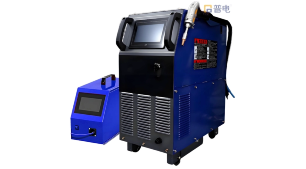
Laser welding machines are revolutionizing the manufacturing industry by providing precise, fast, and reliable metal joining solutions. Unlike traditional welding methods, laser welders use highly concentrated light energy to fuse metals with minimal heat distortion, cleaner edges, and higher repeatability. From automotive frames to delicate medical instruments, these machines offer versatility across multiple industries while supporting both manual and automated production systems.
What Is a Laser Welding Machine
Definition and Purpose
A laser welding machine is a device that uses a highly focused laser beam to melt and join metals or compatible materials. It serves as a modern alternative to conventional welding techniques such as MIG, TIG, and arc welding.
Comparison with Traditional Methods
Feature | Traditional Welding (MIG/TIG/Arc) | Laser Welding Machine |
Precision | Moderate | High |
Heat-Affected Zone (HAZ) | Large | Minimal |
Spatter | Moderate | Minimal |
Speed | Slower | Faster |
Automation | Limited | Easily integrated |
Laser welding produces cleaner seams with reduced post-processing requirements, making it ideal for applications requiring high precision.
Basic Working Principle
Concentrated Energy Fusion
A laser welding machine operates by emitting a highly concentrated laser beam that precisely targets a small area on the workpiece. This intense energy melts the metal at the focal point, and as the molten metal cools, it fuses to create a seamless and durable joint. The precision of the laser ensures minimal spatter and clean edges, which reduces the need for post-weld finishing compared to conventional welding methods like MIG or TIG. By concentrating energy in a localized area, laser welding can handle thin, delicate materials without causing significant thermal distortion.
Heat-Affected Zones and Thermal Distortion
One of the key advantages of laser welding is its ability to minimize the heat-affected zone (HAZ). Traditional welding often generates large areas of heat, which can warp surrounding material, degrade mechanical properties, or require additional finishing. Laser welding confines heat to a narrow zone around the weld, preserving the structural integrity of adjacent metal. This control is especially important in industries like aerospace and electronics, where precision and material stability are critical. Reduced thermal distortion also allows for tighter tolerances in assemblies.
Role of Laser Focus, Pulse, and Power Settings
The weld quality is strongly influenced by the focus of the laser beam, the pulse duration, and the power intensity. A tightly focused beam provides deeper penetration and narrower weld seams, while a defocused or broader beam is better for surface-level joins. Pulse duration affects how quickly the energy is delivered; short pulses reduce heat input, ideal for thin materials, while longer pulses penetrate thicker metals. Power adjustments allow operators to balance speed, penetration, and surface smoothness, making laser welding versatile for various applications.
")
Conduction vs. Keyhole Welding
Conduction Mode
Conduction mode welding melts only the surface layer of the metal. It is ideal for thin sheets, foils, and delicate components where maintaining the original shape and minimizing warping is essential. Because the heat is shallow and spread evenly, conduction mode produces fast processing times, low distortion, and smooth surface finishes. This makes it suitable for electronics, medical instruments, and decorative metal parts where appearance is critical.
Keyhole Mode
Keyhole mode utilizes a high-power laser to create a vapor cavity within the metal, allowing the beam to penetrate deeply. This results in narrow, strong joints suitable for thick materials like automotive body panels, heavy steel frames, or structural alloys. Despite the high energy involved, keyhole mode minimizes thermal warping and preserves adjacent material properties. The deep penetration ensures robust mechanical strength while maintaining a narrow seam width, reducing the need for additional reinforcement.
Welding of Dissimilar Metals
Challenges
Joining metals with differing properties—such as aluminum and steel or copper and titanium—presents several challenges. Variations in thermal conductivity, melting point, and reflectivity can result in incomplete fusion, cracking, oxidation, or weak mechanical bonds. Misalignment or improper heat control can further reduce weld quality, making dissimilar metal welding a complex process.
Techniques for Success
Successful welding of dissimilar metals relies on controlled power and pulse settings, careful selection of laser type, and sometimes hybrid techniques that combine laser with MIG or TIG welding. Use of filler materials can compensate for differences in melting points, while specialized fixturing ensures proper alignment. Preheating or post-weld heat treatments may also be applied to reduce stress and enhance joint strength.
Material Compatibility
With the right machine and settings, a variety of metals can be joined effectively. Aluminum, copper, steel, titanium, and certain alloys are all weldable, but each requires attention to reflectivity, thermal conductivity, and thickness. Choosing the appropriate laser type—fiber, CO₂, or Nd:YAG—ensures optimal energy absorption and weld integrity for each material combination.
Types of Lasers for Welding
Fiber Lasers
Fiber lasers are highly energy-efficient and provide excellent precision, making them ideal for thin sheets and reflective metals. They are widely used in electronics, automotive, and aerospace applications where high accuracy is essential. Fiber lasers also have low maintenance requirements and a long operational life, contributing to cost-effectiveness in industrial settings.
CO₂ Lasers
CO₂ lasers are better suited for thicker plates and large structural components. They are common in heavy industry applications, such as shipbuilding, construction machinery, and industrial fabrication. CO₂ lasers can cut and weld simultaneously in some cases, adding versatility to manufacturing processes. However, they are less effective with highly reflective metals compared to fiber lasers.
Nd:YAG Lasers
Nd:YAG lasers excel in micro-welding and precision applications, such as medical devices, jewelry, and electronic components. They can produce very small, localized welds without damaging surrounding material, which is critical when working with delicate assemblies. Their compact design and ability to focus on minute areas make them highly versatile for specialized tasks.
Adjustable Welding Modes and Parameters
Pulse Duration
The pulse duration of a laser welding machine is critical in controlling heat input and weld penetration. Short pulses are ideal for low-heat welding on delicate materials or thin sheets, minimizing thermal distortion and preventing damage. Medium pulses offer a balanced approach, providing sufficient depth for moderate thickness metals while maintaining reasonable welding speed. Long pulses deliver deeper welds, which are necessary for thick materials, ensuring strong mechanical joints. By adjusting pulse duration appropriately, operators can achieve the desired penetration, seam quality, and appearance while protecting sensitive components.
Frequency Settings
Frequency settings influence how often the laser emits energy pulses, affecting weld uniformity and heat accumulation. Low frequency is suited for thin metals or precision components, preventing overheating and burn-through. Medium frequency is a standard setting, providing consistent results across a wide range of materials. High frequency enables rapid processing for high-volume production environments, such as automotive or industrial assembly lines. Proper frequency selection helps balance speed, quality, and thermal effects, especially when handling metals with varying thermal conductivity.
Intensity / Power Adjustments
Power or intensity adjustments allow fine control over the energy delivered to the workpiece. Low intensity reduces heat distortion, which is essential for thin sheets or delicate assemblies. Medium intensity is suitable for general-purpose welding across common metals like steel or aluminum. High intensity delivers deep penetration for thick metals or reflective surfaces such as copper and titanium. By carefully adjusting power, operators can control seam smoothness, avoid defects like porosity, and maintain optimal weld strength.
Mode Switching
Laser welding machines often offer different operating modes to adapt to specific tasks. Ring mode provides uniform energy distribution around a weld point, which is useful for micro-welding or circular joints. Continuous mode delivers a steady laser beam, ideal for creating long, continuous seams, such as in automotive body panels or pipelines. Switching between modes allows flexibility in handling both small, delicate components and large, structural assemblies.
Effects on Weld Quality
The combination of pulse duration, frequency, intensity, and mode directly impacts the weld’s smoothness, appearance, and heat-affected zone (HAZ). Proper calibration of these parameters is essential to achieve consistent, high-quality welds while minimizing distortion and post-processing needs. Incorrect settings can result in weak joints, surface irregularities, or excessive warping, making parameter control a critical aspect of laser welding operations.
Advantages and Limitations
Advantages
Laser welding machines offer high precision and repeatability, producing accurate welds with minimal human error. They create clean seams with reduced post-processing, and the localized heat input minimizes thermal distortion. The technology is fast and suitable for high-volume production, making it ideal for industrial applications. Additionally, laser welding systems are automation-friendly, easily integrated with robotic systems for consistent, repeatable manufacturing processes.
Limitations
Despite its advantages, laser welding has certain limitations. The initial investment for equipment can be high, particularly for fiber or CO₂ systems. Skilled operators are essential to optimize parameters, manage joint design, and prevent defects. Certain reflective metals, such as highly polished aluminum or copper, can be challenging due to energy reflection, requiring specialized lasers or surface preparation.
Safety and Maintenance Considerations
Protective Equipment
Safety is critical when operating laser welding machines. Operators must wear laser-specific eyewear, heat-resistant gloves, and flame-resistant clothing to protect against burns, eye damage, and exposure to laser radiation.
Workspace Safety
A safe workspace includes proper ventilation and fume extraction to remove harmful particles and maintain air quality. Fire precautions are essential, and the work area must be free of flammable materials, clutter, or obstructions to prevent accidents.
Maintenance
Regular maintenance ensures consistent performance and extends machine life. Inspect lenses, mirrors, and cooling systems frequently, and clean any debris or buildup that could affect laser focus. Proper calibration is necessary to maintain weld quality, prevent defects, and optimize energy efficiency. Following these practices minimizes downtime and ensures reliable, high-quality welding results.
FAQ
· Q1: Can laser welding join both thin and thick metals?
A: Yes, by adjusting power and pulse settings.
· Q2: Are handheld lasers suitable for industrial use?
A: Best for small-scale or repair work; robots are better for large-scale production.
· Q3: What is the lifespan of a laser welding machine?
A: Fiber laser systems can last 10–15 years with proper maintenance.
· Q4: Do all metals require the same laser type?
A: No, different metals need fiber, CO₂, or Nd:YAG lasers based on thickness and reflectivity.
· Q5: Can laser welding damage nearby components?
A: Proper shielding, focus, and parameter adjustment minimize heat-affected zones.
Conclusion
Laser welding machines are revolutionizing metal joining across industries, offering unmatched precision, speed, and reliability. Understanding the right machine type, welding mode, and material compatibility is essential for achieving consistent, high-quality results. Proper operation, parameter adjustments, and regular maintenance ensure optimal performance, whether for automotive frames, aerospace components, medical instruments, or electronics assemblies. For manufacturers, technicians, and designers seeking advanced, dependable laser welding solutions, PDKJ Technology provides a wide range of machines, technical guidance, and customization options to meet diverse production needs. Explore their offerings to discover equipment that enhances efficiency, reduces defects, and supports both automated and manual processes. Contact PDKJ Technology today to learn more and find the ideal laser welding solution for your specific applications.